+34 620 10 75 37info@nanbiosis.com

News U8

Graphene 2018 with the participation of NANBIOSIS Unit 8

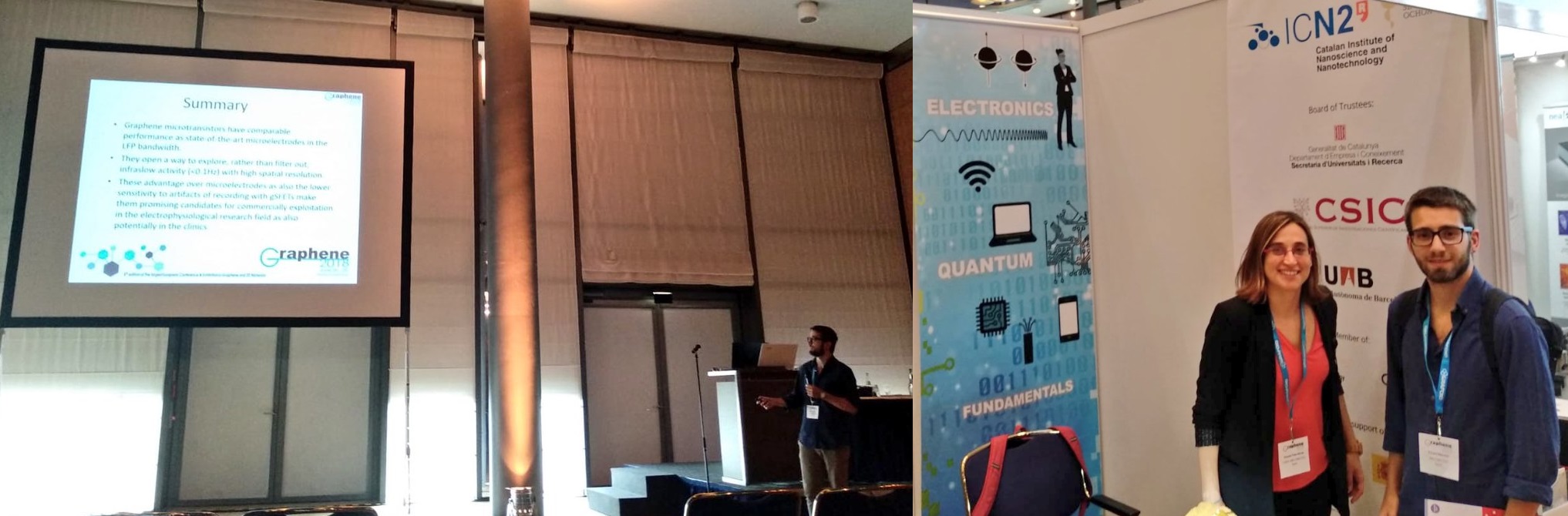
Eli Prats  and Eduard Masvidal researchers of NANBIOSIS Unit 8 Micro and Nanotechnology Unit have shown their last results in ECoG recordings and biosensing using graphene based devices at the 8th edition of Graphene Conference series, the largest European Event in Graphene and 2D Materials, which is taken place in Dresden (Germany) from the 26th until the 29th of June 2018.

Eli Prats has spoken on Label-free Direct Detection of Thrombin through graphene SGFET with chemically modified aptamers and Eduard Masvidal has given a talk on Graphene transistors for ultra-slow frequency (< 0.1Hz) in vivo neural recordings showing graphene SGFETs as a promising technology for recording ultra-slow frequencies with high-spatial resolution
Read More

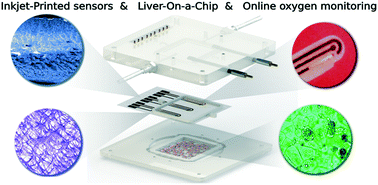
Online oxygen monitoring using integrated inkjetprinted sensors in a liver-on-a-chip system

Scientists of NANBIOSIS Unit 8. Micro – Nano Technology Unit, led by Gemma Gabriel, Scientific Coordinator of the Unit, are the authors of the article “Online oxygen monitoring using integrated inkjetprinted sensors in a liver-on-a-chip system”, published by Lab on a chip.

The demand for real-time monitoring of cell functions and cell conditions has dramatically increased with the emergence of organ-on-a-chip (OOC) systems. However, the incorporation of co-cultures and microfluidic channels in OOC systems increases their biological complexity and therefore makes the analysis and monitoring of analytical parameters inside the device more difficult. In this work, theauthors present an approach to integrate multiple sensors in an extremely thin, porous and delicate membrane inside a liver-on-a-chip device. Specifically, three electrochemical dissolved oxygen (DO) sensors were inkjet-printed along the microfluidic channel allowing local online monitoring of oxygen concentrations. This approach demonstrates the existence of an oxygen gradient up to 17.5% for rat hepatocytes and 32.5% for human hepatocytes along the bottom channel. Such gradients are considered crucial for the appearance of zonation of the liver. Inkjet printing (IJP) was the selected technology as it allows drop on demand material deposition compatible with delicate substrates, as used in this study, which cannot withstand temperatures higher than 130 °C. For the deposition of uniform gold and silver conductive inks on the porous membrane, a primer layer using SU-8 dielectric material was used to seal the porosity of the membrane at defined areas, with the aim of building a uniform sensor device. As a proof-of-concept, experiments with cell cultures of primary human and rat hepatocytes were performed, and oxygen consumption rate was stimulated with carbonyl-cyanide-4-(trifluoromethoxy)phenylhydrazone (FCCP), accelerating the basal respiration of 0.23 ± 0.07 nmol s−1/106 cells up to 5.95 ± 0.67 nmol s−1/106 cells s for rat cells and the basal respiration of 0.17 ± 0.10 nmol s−1/106 cells by up to 10.62 ± 1.15 nmol s−1/106 cells for human cells, with higher oxygen consumption of the cells seeded at the outflow zone. These results demonstrate that the approach of printing sensors inside an OOC has tremendous potential because IJP is a feasible technique for the integration of different sensors for evaluating metabolic activity of cells, and overcomes one of the major challenges still remaining on how to tap the full potential of OOC systems.


Article of reference: DOI: 10.1039/C8LC00456K

This article is part of the themed collection: Organ-, body- and disease-on-a-chip systems

Read More

Why research in micro-electronics? Neural interfaces, interaction between the nervous and the artificial system

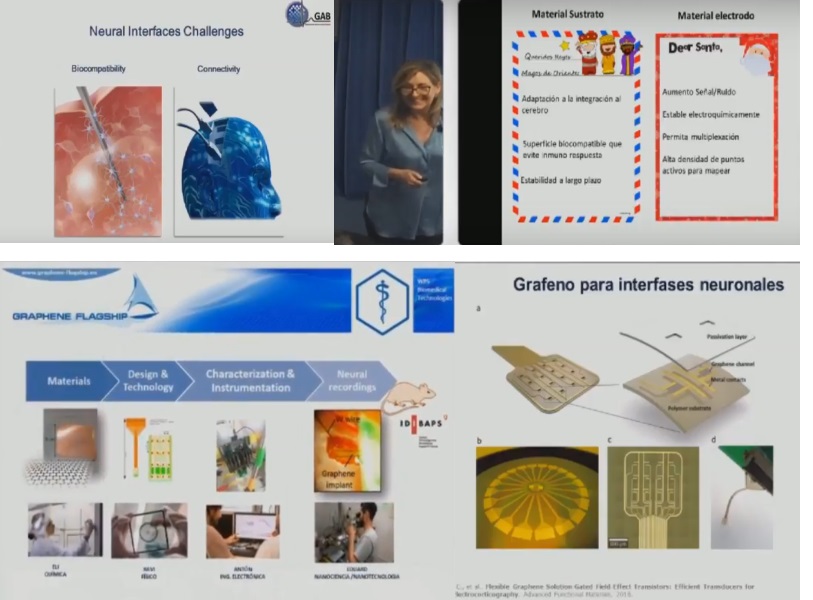
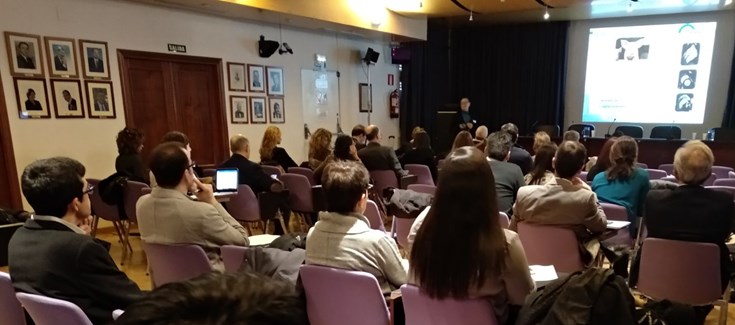
Dra. Rosa Villa,  Scientific Director of NANBIOSIS U8. Micro – Nano Technology Unit, explained last June, 11 at the Residence of Researchers of Barcelona the great scientific challenges in finding tools that allow a good interaction between the nervous and the artificial system.

This talk is part of the series of conferences organized by the CNM with the theme “Why research in micro-electronics?” Dr. Manuel Lozano, Director of the CNM, introduced the talk explaining that with microelectronic technology scientists  can capture the signals that occur in the nerves and in the brain and presented Rosa Villa  as a doctor  with a PhD in cochlear implants (electronic medical devices that perform the work of damaged parts of the inner ear (cochlea) to provide sound signals to the brain). Dr. Villa now directs the group of biomedical applications of the CNM that currently uses nano technologies in their research. Her training in medicine and microelectronics has allowed her to tackle electronic-based projects with biomedical application. Her lines of research are focused, nowadays, on neural interfaces and on organ-on-chip technology, (a multi-channel 3-D microfluidic cell culture chip that simulates the activities, mechanics and physiological response of the entire organs and organ systems, the group of Dr. Villa works mainly the liver, very useful for the test of drug patho-toxicity).

In this talk, Rosa Villa explains her second line research of neural interfaces, the development of suitable interfaces between the biological systems and electronic devices and how they study the improvement of the necessary technologies to restore the motor skills or to know how the brain works applying microelectronic techniques.  These investigations run into the main problems of biocompatibility and conectivity and Rosa Villa shows us her letter to Santa Claus to solve them and how graphene is being of great help.

You can see the whole conference clicking here

The video includes a funny class by Eli Prats to produce graphene at home.

Read More

Agreements signed with MINECO for the allocation of FEDER funds for NANBIOSIS ICTS

In the framework of the FEDER Program in ICTS 2014-2020, several projects related to the ICTS NANBIOSIS have been selected by the MINECO for co-financing with FEDER funds of the European Regional Development Funds program.

An agreement has been signed between MINECO and CIBER (partner of NANBIOSIS for the co-financing of the Project: “Purchase, installation and set-up of production and characterization equipment to complement the Units: U3-Synthesis of Peptides Unit, U18-Nanotoxicology and U20- In Vivo Experimental Platform”. The total budget of the project amounts to € 307,566.16, with 50% financing with FEDER Funds.

Also CSIC (The State Agency Superior Council of Scientific Investigations), institution that houses some of the NANBIOSIS units,  as distributed ICTS,  has signed an agreement with MINECO for the co-financing of the Project: “Purchase and installation and set-up of equipment and production and characterization laboratories to complement the units U2-Production of antibodies, U4-Biodeposition and biosensing, U6-Processing of biomaterials and U8-Micro, nanotechnology. The total budget of the project amounts to € 312.800,00 €, with 50% financing with FEDER Funds.

These two projects aim to increase the quantity and quality of the services offered by th implied units, with the objetive of positioning them as national and international benchmark in their respective fields of application. As a consequence, an increase in the performance (number of services and number of users) of each unit is expected, especially from companies (pharmaceutical and small biotechnology).

CSIC and CIBER are processing the necessary contracting procedures for the execution of these projects.

Read More

NANBIOSIS collaborates in the dissemination of science and triumphs in the Pint of Science Festival

On May 16, scientists from two units of NANBIOSIS filled the pubs, not to talk about football but about science.

According to Jorge Bueno, Coordinator of Pint of Science in Spain, at the VanguardScience is also culture, just as we go to the bar to talk about football or politics, we can also talk about science, we want people to conceive science as part of society

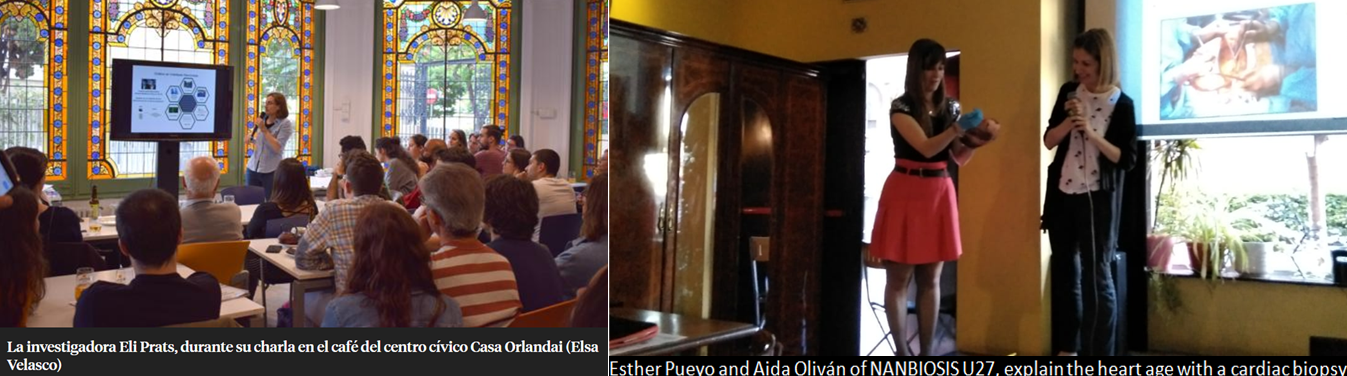
In the cafe of the civic center of the Casa Orlandai in Barcelona, ​​Eli Prats, a researcher of NANBIOSIS U8. Micro – Nano Technology Unit, explains her group has  developed graphene electrodes, a material with unique properties, that can monitor the activity of the brain in a less invasive than conventional ones. “We have tested it in rats and we have discovered that graphene can detect very poorly studied brain waves, which occur just before dying, just before an attack of epilepsy or before a migraine attack.” The researcher shows a sample of the tiny electrodes, which passes from hand to hand in the pub. “It’s still just an idea, but theoretically in the future these electrodes, placed on a person’s brain, could send a signal to a tablet and predict when they will suffer an attack of epilepsy,” adds Eli Prats.

Esther Pueyo, researcher of NANBIOSIS, U27. High Performance Computing, in the Drinks and Pool Aranda pub of Zaragoza explained that “Chronological age does not matter, but the biological one does,  not all hearts age equally”  and she tried to answer the questions why do I look older? What other people of my age? Will this have consequences? To show the tiny tissues Esther and researchers around her commonly work with, biopsies were collected from a cow heart and examples of the experimental and theoretical analyses they conduct were illustrated.

Throughout Spain, a total of 730 scientists have participated giving talks within the Pint of Science Festival, in 56 cities,  together with around 400 organizers, all of them volunteers.


Read More

Nanotechnology, gene therapy, omics therapies and ‘big data’

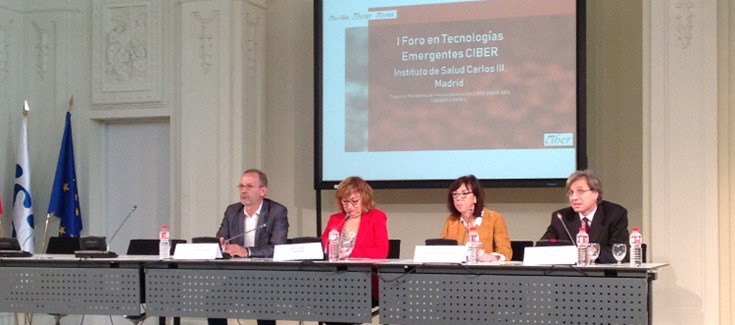
Nanotechnology, gene therapy, omics therapies and ‘big data’ were the topics discussed in the Forum on Emerging Technologies oganized on May 8 by nanotechnology, gene therapy, omics therapies and ‘big data’ were the topics discussed in the I Forum on Emerging Technologies held on May 8, organized by the CIBER Internationalization Platform, of which the CIBERER, the CIBER-BBN and the CIBERES.

The objective of this event, structured in sessions of presentations and scientific debates about the types of technologies addressed, was to promote the exchange of ideas and scientific knowledge with the aim of generating new collaborations among the CIBER research groups  such as participation in transversal projects or the development of cutting-edge technologies.

NANBIOSIS was represented by Pablo Laguna (Unit 27, High Performance Computing), Laura Lechuga (Unit 4, Biodeposition and Biodetection Unit), José Luis Pedraz (Unit 10, Drug Formulation) and Rosa Villa (Unit8, Micro – Nano Technology Unit)

Read More

I Forum on Emerging Technologies organized by CIBER

On May 8th, will take place in Madrid, at the Assembly Hall Ernest Lluch of the Instituto de Salud Carlos III, organized by CIBER Internationalization Platform (CIBER-BBN, CIBERER, CIBERES) the I Forum on Emerging Technologies.

The objective of this meeting is to promote the exchange of ideas and scientific knowledge among the CIBER research groups with the aim of generating new collaborations for participation in cross-cutting projects and the development of border technologies. The content of the forum, centered on the type of technology and possibilities it offers, is structured in a program of lectures and scientific debates whose final objective is the discussion and the joint generation of ideas. This first edition of the forum will be focused on Gene Therapy, Nanotechnologies and Omic Technologies-Big Data.

Some Units of NANBIOSIS will participate:

  • José Luis Pedraz, Scientific Director of  Unit 10 Drug Formulation, will speak of “Development of non-viral vectors for gene therapy
  • Laura Lechuga, Scientific Director of Unit 4  Biodepositon and Biodetection, will talk about “Nanodispositive biosensors for advanced clinical diagnosis
  • Rosa Villa, Scientific Director of Unit 8 Micro–Nano Technology, Ramón Martínez, Scientific Director of Unit 26 NMR Biomedical Applications II and Esther Pueyo, researcher of U27 High Performance Computer will moderate the sessions.


Programme and registration details


Read More

Non-invasive glucose sensing in tears

Currently numerous medical diagnoses or follow-ups of many diseases are carried out by conventional methods such as clinical tests in laboratories and hospitals, being these invasive, slow and expensive.

Thanks to advances in technology, Point-of-Care (PoC) devices allow testing and monitoring of a multitude of biomedical markers or parameters in order to: (i) reduce costs, save time and reduce the complexity of the analysis; (ii) allow analysis in medical centers, primary care centers or even at home and (iii) real-time results allow to accelerate the decision-making on a patient. Thus, PoC devices respond to a demand from medical doctors as is the efficient health service thanks to the rapid availability of the laboratory analysis results.

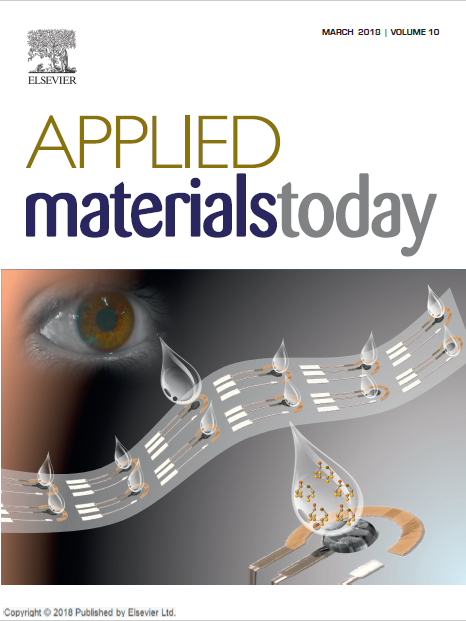
In this context, a team of scientists from Barcelona have collaboratively developed a non-enzymatic sensor for glucose sensing in a non-invasive manner in tears. The work, cover of the magazine Applied Materials Today, demonstrates the proof of concept of the functionality of this electrochemical sensor.

Ana Moya, researcher of the CIBER-BBN and member of the research group of the Institute of Microelectronics of Barcelona CSIC, responsible for the sensors manufacture explains how these devices are fabricated by the innovative technology of Printed Electronics. Specifically, electrochemical glucose sensors have been manufactured by printing microelectrodes using Inkjet Printing Technology (IJP) on a flexible substrate of polyethylene terephthalate (PET) with silver and gold inks. The IJP dispenses small drops of the material to be printed under a graphic environment. This direct writing approach without the need of masks drastically reduces the total manufacturing time and cost of the sensors, and facilitates iterative design changes during sensor development.

Gemma Gabriel, Scientific Coordinator of  NANBIOSIS U8. Micro–Nano Technology Unit and researcher of the CIBER-BBN in the Institute of Microelectronics of Barcelona CSIC, explains how the IJP is a promising and low-cost alternative to conventional microelectronic manufacturing technology, which will allow the creation of a multitude of highly specific sensor platforms and sensitive with analytical application in the medical area. In line with the research group, the advance in novel functional materials with these technologies is of paramount importance for the development of new generations of disposable sensor platforms to solve a wide range of applications in the medical field.

Agostino Romeo, member of the Smart nano-bio-devices Group at the Institut de Bioingenieria de Catalunya (IBEC) led by Samuel Sánchez, highlights how the use of copper oxide microparticles (CuO) has allowed the successful modification of the electrodes, leading to a sensitive, stable and cost-effective platform for the non-enzymatic detection of glucose. The selectivity, reproducibility and life time provided by this functionalization with CuO has shown that these sensors are reliable tools to perform a personalized diagnosis of the health of an individual.

The good sensitivity and selectivity of the electrochemical sensor presented here has made it particularly suitable for the non-invasive sensing of glucose in tears. This has been demonstrated in this study in which the glucose level in human samples has been measured and correlated with commercial devices.

All this allows us to foresee that the use of this type of sensors for the diagnosis of eye diseases such as diabetes, where it is possible to achieve a painless and non-invasive monitoring, has a great opportunity in a disease as widespread in the world as it is this one. Thus, versatility, short manufacturing time and low cost makes IJP a valuable technology alternative to traditional sensor manufacturing techniques. Thus, the technology here presented can be adapted for the detection of many other substances of interest in other fluids such as saliva or urine.


Article of Reference:

Romeo A, Moya A, Leung TS, Gabriel G, Villa R, Sánchez S.  “Inkjet printed flexible non-enzymatic glucose sensor for tear fluid analysis“. Applied Materials Today 10 (2018) 133-141

(DOI)

Read More

NANBIOSIS ICTS invites groups and companies to discuss Smart Biomaterials and devices for Drug Delivery

On February 22nd, the National School of Health of the Carlos III Health Institute hosted the forum on Smart Biomaterials and biomedical devices for applications in drug delivery and regenerative medicine, organized by the ICTS Nanbiosis, an infrastructure shared by the CIBER-BBN and the Center of Minimally Invasive Surgery Jesus Usón (CCMIJU). This is the first groups/companies meeting organized by Nanbiosis, in which about 70 B2B meetings  were held.

The meeting brought together about 40 participants from 14 research groups (from the CIBER-BBN and the CCMIJU) and 10 companies, which discussed the latest advances in the research lines developed by the groups and platforms of Nanbiosis and on the needs and demands of the industry in smart biomaterials and devices for targeted drug delivery and regenerative medicine.

Jesus Izco, Coordinator of Nanbiosis, presented the new Cutting-Edge Biomedical Solutions“, soon available on the ICTS website. These are integrated solutions to advanced challenges in nanomedicine, biomaterials, medical device, and diagnostic that can be developed by several units under a  one-stop shop model, optimized with the experience and scientific and technical knowledge of the research groups of excellence that manage the involved units. Some of the Cutting-edge biomedical solutions presented in the meeting were preclinical validation of biomaterials, mechanical and surface characterization, biocompatibility and studies of biofilm formation and infections.

The CIBER-BBN prsentations were: “Instructive materials for regenerative medicine” by Miguel Ángel Mateos (NANBIOSIS U5 IP: Elisabeth Engel); “Molecular biomaterials for drug delivery and biomedical applications” byNathaly Veronica Segovia (NANBIOSIS U6 / IP Jaume Veciana and Nora Ventosa); “Advances with micro-nano technologies for in vitro devices and point of care” by Rosa Villa (NANBIOSIS U8 ); “Development of new dosage forms for advanced therapies based on new biomaterials” by José Luis Pedraz (NANBIOSIS U10); “Contact lenses functionalized for the prevention of corneal infections” by Jordi Esquena (NANBIOSIS U12 / IP Carlos Rodríguez); “Combined in-silico and in-vitro models of the cell microenvironment and drug delivery effects in cancer and tissue engineering applications” by Fany Peña (NANBIOSIS U13 / IP Miguel Á. Martínez); “Surface of the biomaterial: the first contact with our body” by  Marisa González (NANBIOSIS U16 ); “Use of biomaterials for the repair of soft tissue defects” by Bárbara Pérez Khöler (NANBIOSIS U17 / IP J M. Bellón and Gemma Pascual); “Controlled release systems based on mesoporous materials with molecular doors for applications in therapy and diagnosis” by Ramón Martínez Máñez (NANBIOSIS U26); “New intelligent devices and biomaterials for the treatment of pathologies of the retina and the nervous system” (Eduardo Fernández); and “Near-infrared responsive scaffolds for biomedical applications” (Nuria Vilaboa).

On the part of the CCMJU, the presentations were the following: “Application of Mesenchymal Stem Cells in preclinical models for surgical and cardiovascular research” by Javier García Casado (NANBIOSIS U14); “Regenerative medicine in animal models of cutaneous healing and diabetic models” by Beatriz Moreno (NANBIOSIS U19); “Preclinical studies of biomaterials” by Idoia Díaz-Güemes (NANBIOSIS U21 /IP: FM Sánchez Margallo); “Porcine model of myocardial infarction as a translational research platform in regenerative medicine” by Verónica Crisóstomo (NANBIOSIS U24).

In the turn of the companies, they presented some collaboration opportunities AJL, i-Vascular, Praxis Pharmaceutical, Technical Proteins Nanobiotechnology and REGEMAT 3D; and they also participated in the Rovi, Viscofan, Biomag and Biogelx Laboratories forum.

These meetings, where links are established between research groups and companies, address issues of business and scientific interest, allowing direct contacts between researchers and business managers.

Read More

Microfluidic device that reproduces the blood-retinal barrier

The use of In vitro testing with living cells as an alternative to animal research has limitations like the difficulty to reproduce the interaction of cells. To overcome it, scientists are working on the development of systems that simulate and reproduce functions of tissues and organs in conditions very similar to reality. They are called organ-on-a-chip, which include microenvironments and microarchitectures that simulate the state of tissues and living organs.

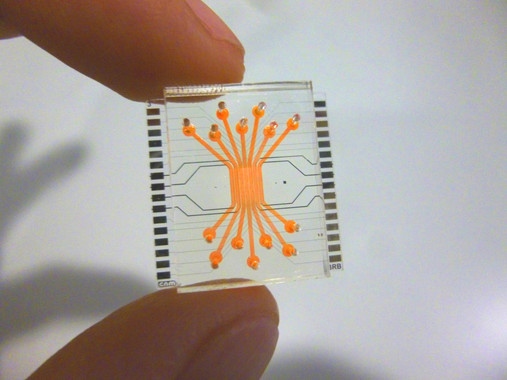
Scientists of NANBIOSIS Unit 8 have published in an article, cover of the magazine “Lab on a Chip”, the “proof of concept” of a microfluidic device that reproduces the blood-retinal barrier, that is, a microchip that allows us to reproduce what happens ” in vivo ‘in the retina. This device can be an essential tool that revolutionizes experimentation ‘in vitro’.

José Yeste, researcher of the CIBER-BBN, explains that the micro device consists of several parallel compartments, in which different types of cells have been cultivated to emulate the structure of cellular layers of the retina. They are endothelial cells, that is, they form the internal part of the barrier, in contact with the blood capillaries, through which oxygen and nutrients reach the retina. In addition, it is also composed of neuronal cells (which form the neuroretina), and pigment epithelial cells, which constitute the outer layer. The compartments are interconnected in their lower part by a network of micro-grooves, so as to allow an intercellular communication through the exchange of signalling molecules between cells. Thus, cells can send their signals to others and interact, much like they would in a living organism. In addition, the micro device allows the endothelial cells to be subjected to the mechanical stimulus induced by the flow to emulate a more physiological microenvironment.

“Within the body, the endothelial cells that line the inside of blood vessels are subject to the mechanical stimulation of blood circulation. In cell cultures that do not reproduce this flow, the cells are as ‘lethargic’, and do not respond in the same way they would in real conditions, “explains Rosa Villa, Scientific Director of NANBIOSIS Unit 8 and leader of the group of Biomedical Applications of the Microelectronics Institute of Barcelona of the CSIC.

Scientists have evaluated the correct formation of the blood-retinal barrier by performing permeability, electrical resistance tests, as well as protein expression of tight junctions between cells. These tests were intended to verify that the barrier is well formed, that it has closed but maintains the natural permeability, sufficient to allow the passage of nutrients and oxygen, and that the cells are in contact and interact with each other.

This work has been developed in the ICTS NANBIOSIS, more specifically in Unit 8 of Micro-Nano Technology located in the IMB-CNM. It is also part of the results of the CIBER intramural project called Micro BRB: Microfluidic model of retinal neurovascular unit to identify new therapeutic targets in diabetic retinopathy (2016-2017) in wich also  participates Unit 3 of NANBIOSIS

Source: http://noticiasdelaciencia.com/not/27155/un-microchip-microfluidico-reproduce-la-barrera-de-la-retina-humana/

Article of reference:

A compartmentalized microfluidic chip with crisscross microgrooves and electrophysiological electrodes for modeling the blood–retinal barrier. Jose Yeste, Marta arcía-Ramírez, Xavi Illa, Anton Guimerà, Cristina Hernández, Rafael Simó and Rosa Villa. DOI: 10.1039/C7LC00795GLab Chip, 2018, 18, 95-105

Read More